Expensive diesel fuel isn’t just driving up costs—it’s driving trucking companies out of business.
4 days
Expensive diesel fuel isn’t just driving up costs—it’s driving trucking companies out of business.
there’s an outfit here that had like 20-30 rigs and that many drivers running all over the u.s. and canada. guy that owned it bragged about all his drivers making well over 100k a year. big maga freak, giant signs and flags along the street in front of his office and shop. he had the most and the biggest signs in town.
fast forward two years…
no tractors. no trailers. wash bays empty. service garage empty. only the occasional car at the office building. the last remaining tractors disappeared a few months ago.
fuckwit still puts up the giant signs and flags.
You know why right?
You know why he still has the big signs up and why he’s still considers himself to be a supporter of trump and his ilk?
Because politics in America are treated like team sports… Got to stick by your team in the good years and the bad unfortunately it’s just not how politics work you can’t just trade a bad politician for a better one from another state.
Four weeks left till midterms.
I’ll be voting as far left as I can, as I always have. I expect there will be quite a few newcomers doing the same.
I’m grateful to the founders of this country giving states control over elections. That might just save us. Fingers crossed.
This is obviously intentional.
Burn down all business, buy the fuming ashes for cheap.
Ding, monopoly.
i have a different theory on some of these specific businesses.
Edit: Digging deeper into source links of source links, all the big players with multiple trailers and big contracts like Amazon are Chapter 11 (reorganized), so yea, my theory holds.
I heard part of project 2025 is to bankrupt vital business, like grocery store trucks, in order to buy them up to create a monopoly. Just evil…
Doesn’t matter, tech stocks are up, up, UP! Who needs real things when you can have AI?
How does one transport the components of an AI infrastructure? That’s correct. The tubes. Elons millions of miles of tubes.
I’m willing to bet all of the CEOs of those companies voted for this.
Because bankruptcy means getting bought, which means payday.
Yes all the time since the dawn of humanity and everywhere. They always take their share from the top of the crop first. I myself have seen CEOs cash out on bankruptcy while their workers still have months in unpaid wages and unpaid end of service:
https://www.thestreet.com/automotive/rivian-ceo-walks-away-with-403-million-despite-huge-losses
https://www.ft.com/content/ca84483c-220c-42cf-a405-84b96a2d1b04
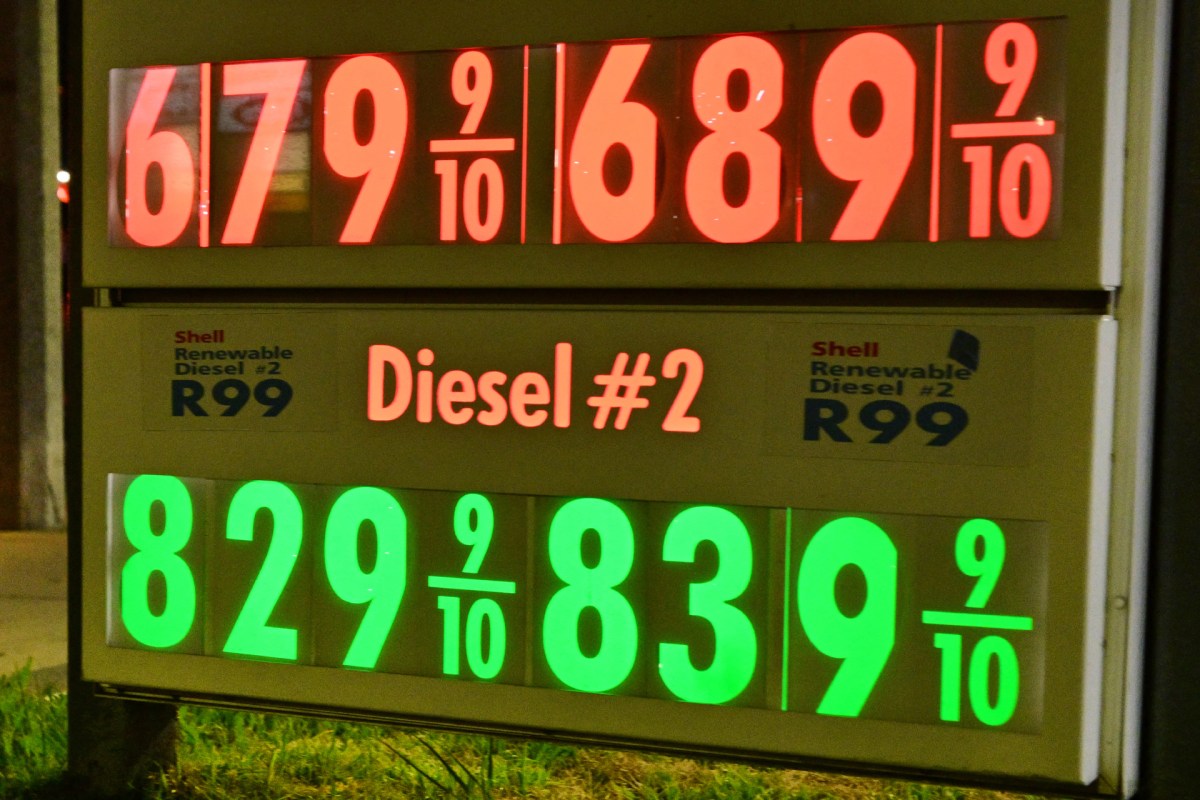
Anyone know the state the photo was taken in? I just drove by a sign for diesel and it was $6.29 in a higher gas tax state. CA and HI will make for better headlines, yes, but it doesn’t help take the pulse on gas prices most of us are experiencing.
One of the fundamental issues I have with private corporations is how they seem to think raising prices is going to work indefinitely.
Prices should fluctuate with the market, but they never seem to come back down, at least not significantly. You cannot simply keep raising prices forever to avoid taking a loss, because eventually you are going to incur losses anyway. Nobody is going to buy your product if it becomes too expensive.
Diesel being $6.30 a gallon in America is ostentatious. It may not be completely unreasonable given the circumstances, but that doesn’t make it any less absurd.
And when it comes to petroleum, it doesn’t actually matter that much whether a particular company makes money every single quarter. Somebody is going to step in and sell it at whatever price the market will support, as long as there is demand.
I think we have been conned, as a society, into believing that corporations simply cannot incur losses or they will immediately go out of business. Historically, that has never really been the case. Essential businesses and gargantuan corporations are consistently propped up by governments, investors, and financial institutions because, in many cases, we simply cannot allow them to fail.
We cannot currently function as a modern society without diesel.
So when a company says, essentially, “We have to raise prices because otherwise we’ll lose money,” my response is: Okay. Then lose some money.
Businesses are allowed to have bad years. They are allowed to make less profit. They are even allowed to lose money. The idea that every company must continually increase prices, maintain or increase profit margins, and never meaningfully absorb a loss is not some immutable law of economics. It is a business model.
The article doesn’t state what the normal number of bankruptcies is. So we can’t really tell from a single number if this is normal, better or worse.
While not exactly the bankruptcy number this seems to show we already had a downturn and 2026 was supposed to be a “recovery year”
https://truckdispatchexperts.com/resources/trucking-industry-forecast-2026/
Maybe someone with the equipment and skills can pull together a clearer picture.
https://en.wikipedia.org/wiki/Category:Transport_companies_by_year_of_disestablishment
That is not a useful data set. It includes SeatGuru as a transport company. It also shows only one company disestablished in 2026.
I work in this industry. Read freightwaves to see that the market typically flips like this every few years and we’ve been very overdue for it. Diesel prices and CDL language crackdowns have accelerated the flip, but it was always expected.
Well according to the DOT, there are just north of 2.1 Million registered motor carriers. Of those. 1,083,501 are for hire.
A couple of these were Amazon contractors, 7 were 6 or fewer trucks and drivers. Pretty much all of the midsize or larger companies went into chapter 11, so they’ll continue operating just with a restructured debt plan.
It was the 8 small companies with 6 or fewer trucks and drivers that entered chapter 7 liquidation. And I imagine that’s pretty typical for those tiny companies any time diesel spikes.
That isn’t surprising. Trucking is a razor thin commodity service and any pricing shock will ruin companies.
That’s the POINT. So that the big companies can buy up all the small bankrupt ones.
oh noo, those poor trump lovin’ truckers better start praying for a bailout like the farmers