
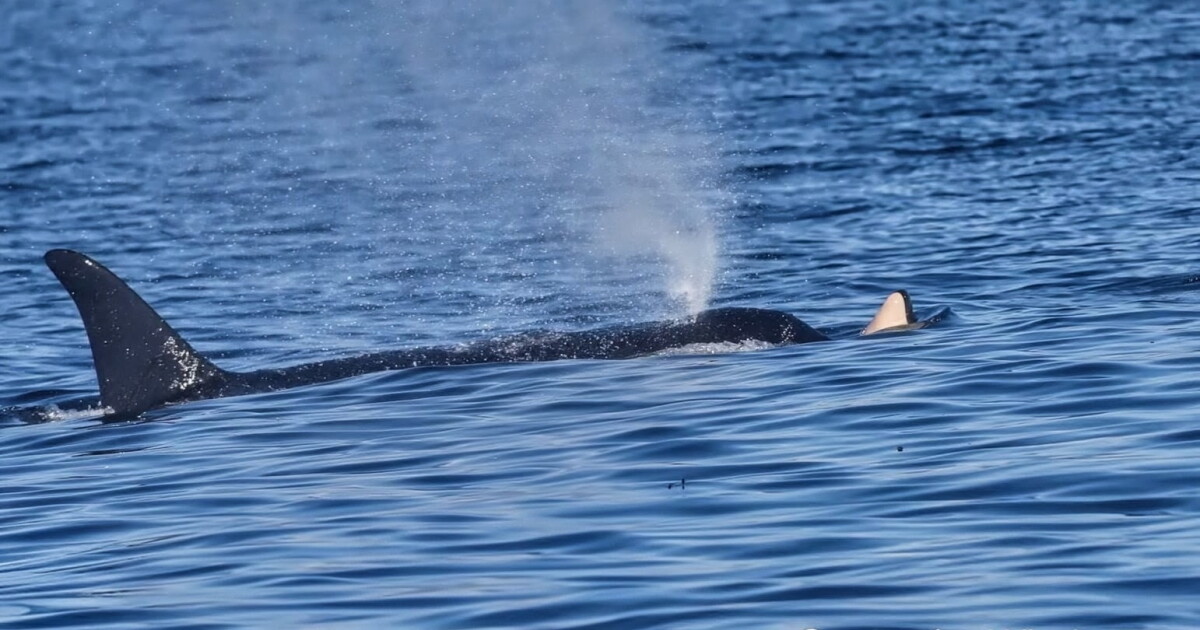
When whale researchers encountered a pod of orcas in the Strait of Juan de Fuca between Washington and British Columbia on Saturday, they spotted one female swimming strangely: She was carrying a dead newborn orca on her nose.
The Center for Whale Research documented the sad procession. News of it spread at a forum on the future of the southern resident killer whales Monday at Town Hall Seattle.
The female, a 30-year-old known as J31 or Tsuchi, had previously been photographed carrying a dead newborn on her nose in 2016.
J31 has one living offspring, a 7-year-old daughter, but has lost at least eight other calves before or just after birth.
“She’s kind of the poster child, if you will, for the pregnancy failure issue in this population,” whale researcher Deborah Giles with the nonprofit SeaDoc Society said.
Less than one-third of pregnancies among the southern resident killer whales, as the endangered, fish-eating orcas of the Northwest are known, result in a young whale living to its first birthday.
“Either they’re miscarrying, or they’re giving birth and then the babies are dying right away,” Giles said. “J31 has had so many of these failed pregnancies.”
Researchers say a dearth of the orcas’ main food, Chinook salmon, is the biggest single threat to their survival, though they are also threatened by water pollution, ship noise, and inbreeding.
“It’s when a female is not getting enough to eat that the body’s natural response is to abort that pregnancy,” Giles said.
The endangered orcas’ population stands at 76, down from 88 in 2005, when they were granted protection under the U.S. Endangered Species Act. They were declared endangered in Canada in 2001.
