
THe whole article is quite interesting and footage is even better, I highly recommend
Sample videos:
A graceful gossamer worm
Designing the Future 3 | 4K ROV Highlights
New ways of seeing | Designing the Future 3
Video and photo gallery here as well. The press release has many of them in display too, but I can’t find a link without google in it
From the linked article:
[…] scientists used advanced technologies to explore the Ocean’s midwater — the space between the sunlit layer and the seafloor — which is Earth’s largest and least explored habitable ecosystem […]
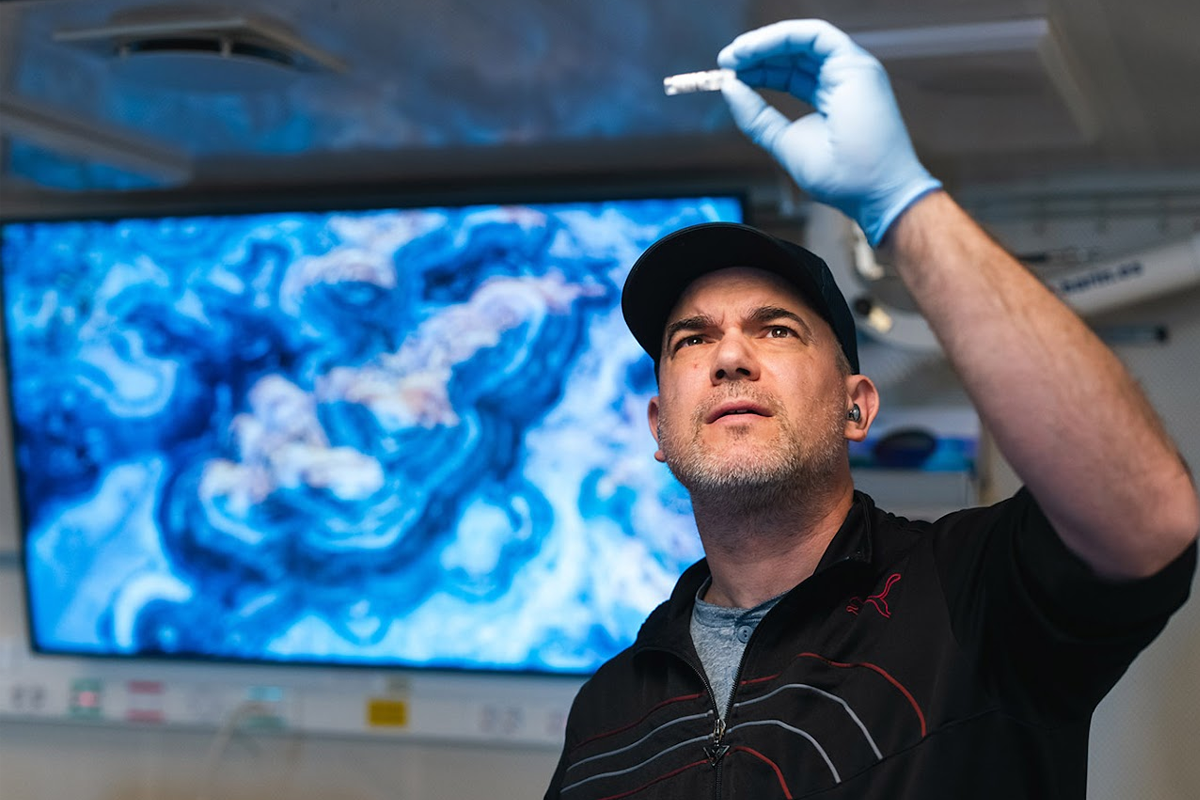
The technologies used to identify new species were a combination of imaging systems and genetic analyses. Senior Research Scientist Mike Lomas in the NCMA
The imaging systems included the DeepPIV (particle image velocimetry) and EyeRIS (remote imaging system) instruments, developed by the Bioinspiration Lab at MBARI (Monterey Bay Aquarium Research Institute), which were attached to Schmidt Ocean Institute’s remotely operated vehicle SuBastian. DeepPIV and EyeRIS are sophisticated, non-invasive tools for scanning marine animals; they use lasers to scan organisms and create 3D images of them. In addition, the team used a shadowgraph camera, which can image the finer details of animals not visible in the 3D scans, developed by Dhugal Lindsay from the Japan Agency for Marine-Earth Science and Technology, a co-PI on Burns’ Ocean Shot. The images help scientists describe the shape and internal structures of animals without having to collect them […]
Many midwater animals are gelatinous, with soft, delicate bodies that are often damaged by traditional sampling methods. To address this challenge, the expedition used additional technologies that allowed scientists to observe animals in a controlled environment that mimics their natural habitat. These included a virtual reality chamber developed at the University of Western Australia and a “gravity machine” — a specialized microscope that functions as a hydrodynamic treadmill for studying microbes — developed at Stanford University.
The team used another microscope developed at Stanford University to gain critical new insights into the physiology of midwater animals. The microscope, known as Squid, is an open-source, confocal microscope. Using Squid, the team achieved a first for research at sea and imaged living internal cellular structures in 3D. One of the organisms imaged was a large single-celled microbe called a protist. The microscope enabled the scientists to observe how the protist’s cellular structure interacted with its glass skeleton.
In tandem with the high-resolution imagery, the team sequenced genomes from collected specimens onboard the vessel, enabling them to rapidly identify new species under the leadership of Burns and Cheryl Ames, a professor at Tohoku University.