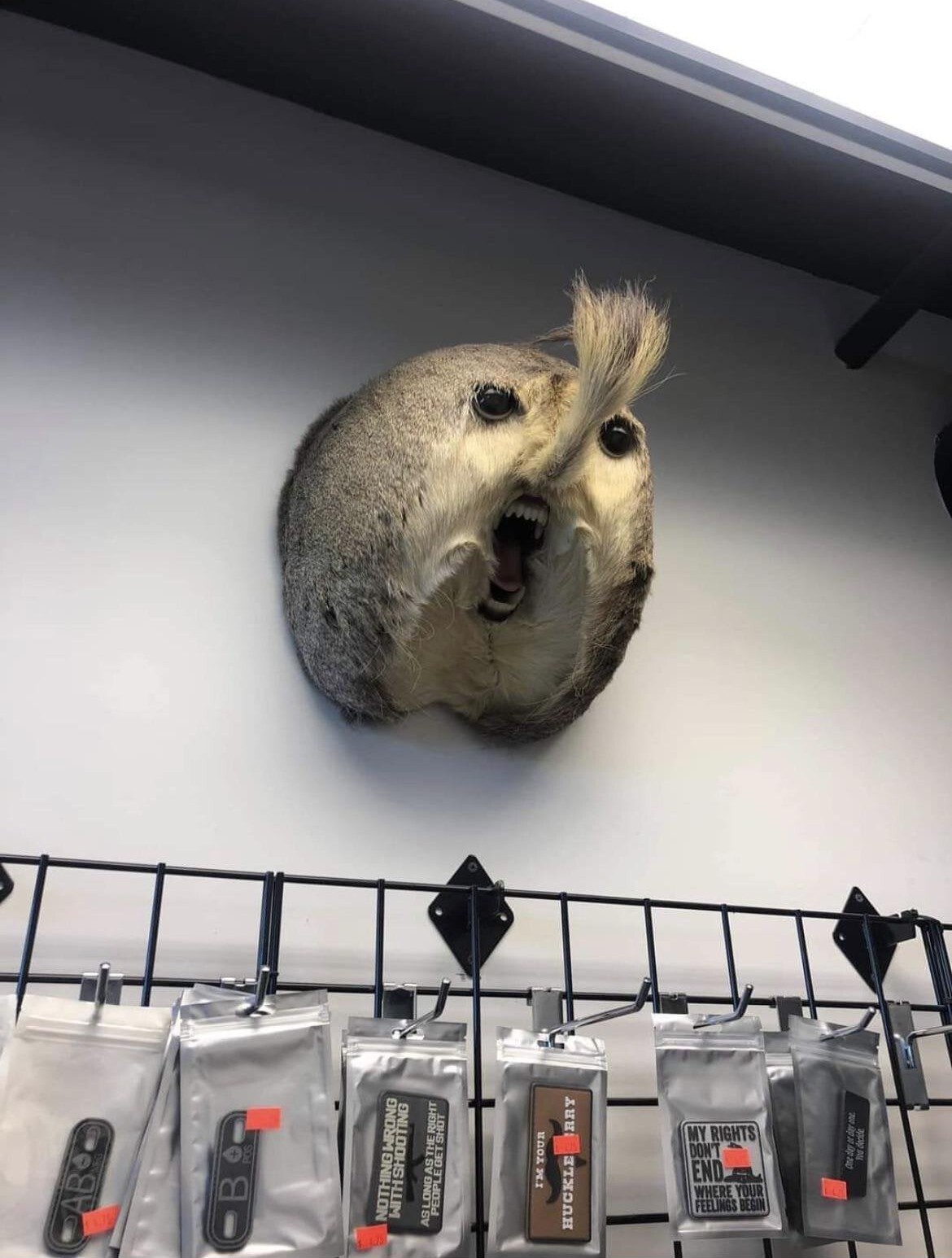
I wonder how effective googly eyes would be as they bounce around as the animal move

Facing hundreds of human-wildlife conflict cases in southeastern Zimbabwe, livestock owners are turning to a low-tech solution: painting fake eyes on their animals’ rear ends.
The eye-spots trick predators into abandoning hunts, drastically reducing attacks on farm animals.
Caveat is that hyenas don’t seem to care:
In 2020, wildlife ecologist Cameron Radford set out to test whether eyespots on livestock would discourage ambush predators like lions. In a study involving about 2,000 cattle in Botswana that had recently reported high levels of predation, not a single one of the 683 cows he and his colleagues daubed with artificial eyes was killed by lions or leopards. In contrast, 15 out of 835 unmarked cows in the study area were recorded as killed by one of those two ambush predator species (as were four animals whose rumps were marked with simple crosses).
Spotted hyenas (Crocuta crocuta) muddied the data, killing one cow from each of the three categories during this period, suggesting their hunting success is unaffected by decoy eyes.
Many forecasts predict drought conditions for Southern Africa this year, in the shadow of a powerful El Niño event. Bandama said that in his experience, drought pushes herders into game reserves in search of greener pasture, while predators may raid farms and homesteads more frequently.
From “Artificial eyespots on cattle reduce predation by large carnivores” DOI